USRA Details Its Role in NASA-IBM’s Open-Source Lunar AI Model
USRA says it contributed planetary science expertise and datasets to NASA and IBM’s newly released open-source Lunar Foundation Model. Trained on nearly two million lunar data bundles, the model combines multiple types of observations to support scientific analysis. The release reports competitive benchmark results, while highlighting the extensive human labeling behind the work.
The actual story.
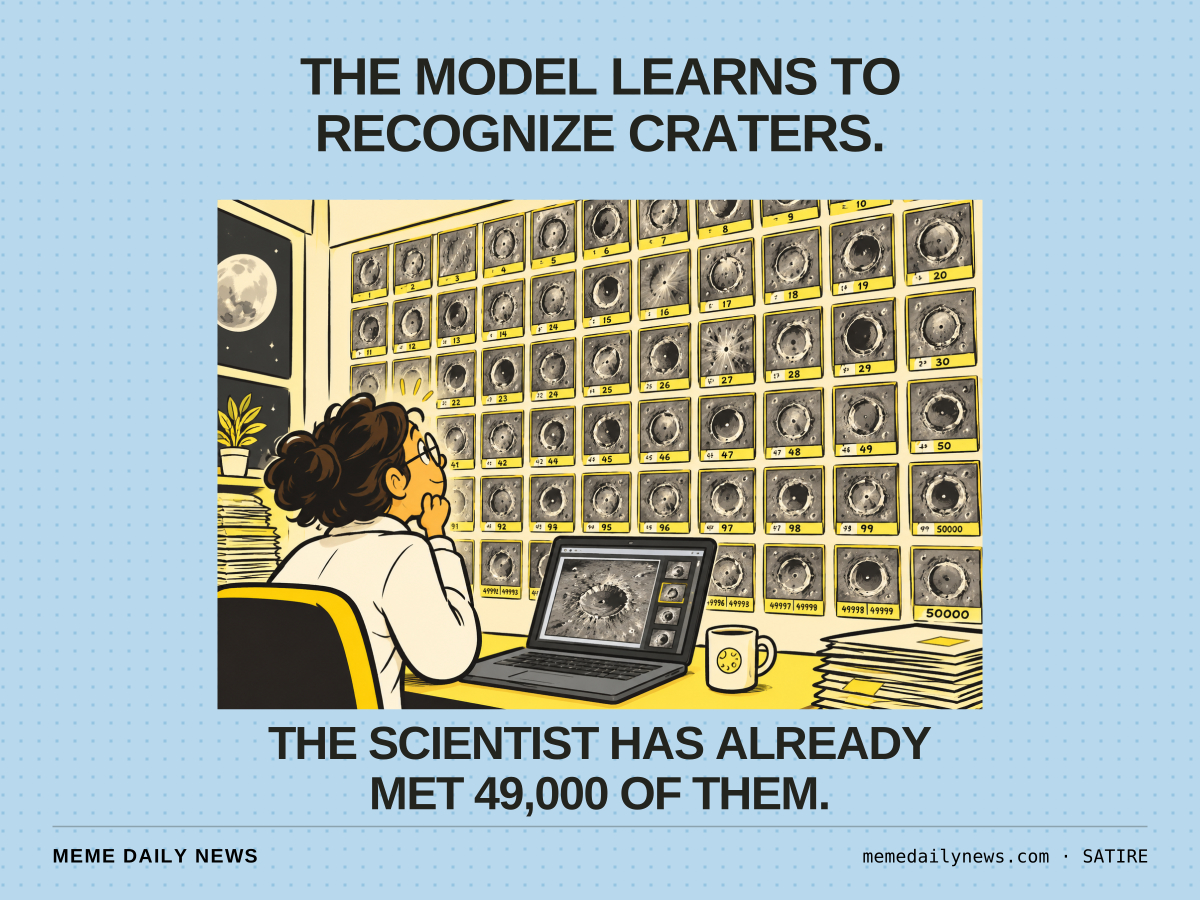
In its September 18, 2026 release, USRA says the model was pretrained using SomBench, a lunar dataset spanning 11 modalities and two spatial scales. Evaluations covered crater detection, mapping irregular mare patches and estimating polar ice prospectivity—not confirming ice discoveries. USRA reports that the model matched or exceeded the selected comparison models across those benchmarks and showed strong label efficiency for crater detection. USRA scientist Rachel Slank led development of a high-resolution crater benchmark, manually identifying more than 49,000 craters. The release says the pretrained model, fine-tuning code and benchmark datasets are openly available through Hugging Face. These results come from a participating institution’s announcement, not an independent assessment.
The lunar AI story is also a dataset story: combining observations and painstaking human labeling helped build the foundation for reusable research tools.
Receipts, not rumors.
Read the original reporting: Hacker News ↗
The reporting above provides context. The meme is satire. This story was produced and published automatically from the linked source.
Got a better punchline?