
SpaceX’s Starfall Is Selling Lab Time in Microgravity
Customers are booking Starfall missions for pharmaceutical research and in-space manufacturing in 2028 and 2029. The pitch combines time in microgravity with a return to Earth; the commercial results are still ahead.

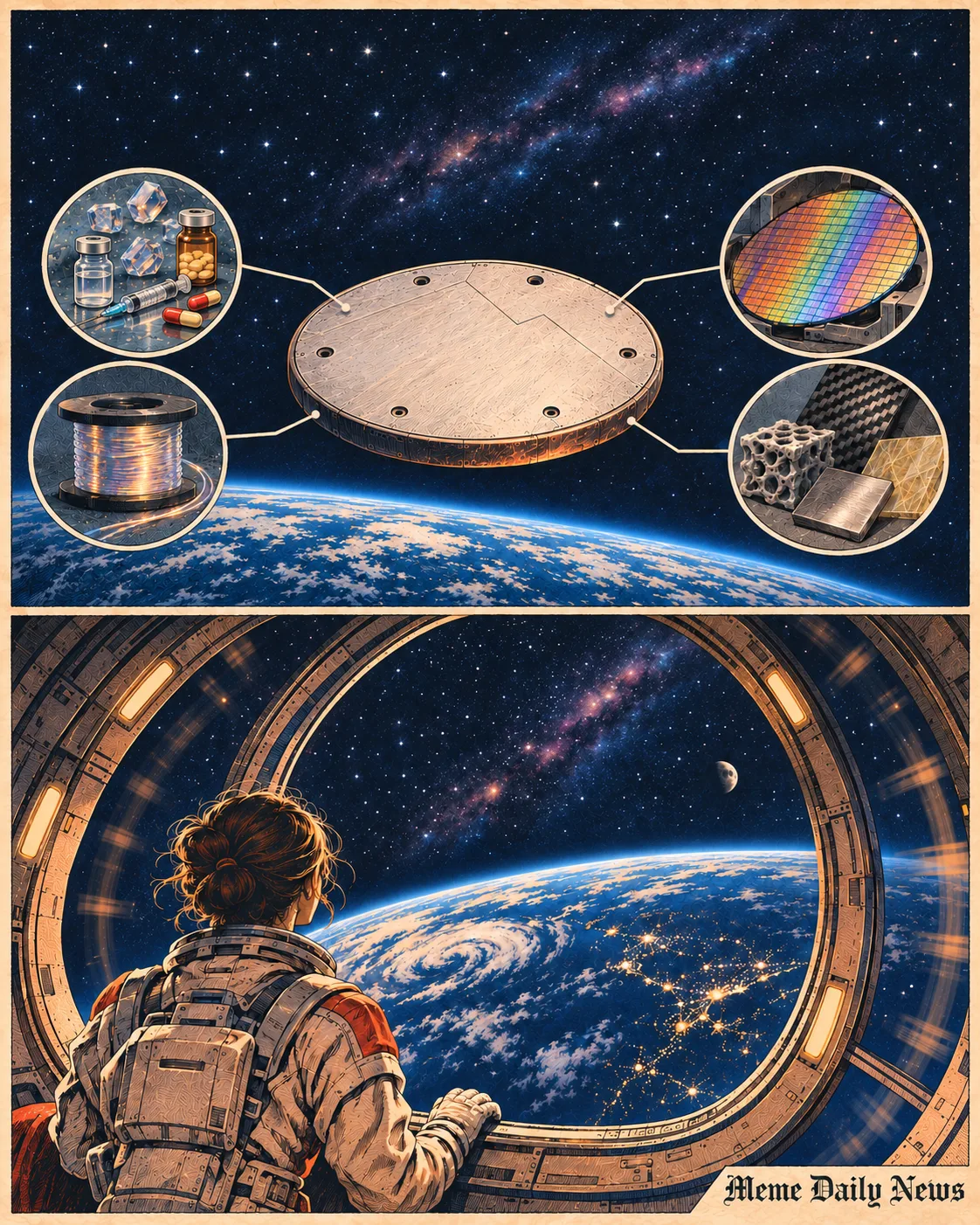
The actual story.
SpaceX is selling access to an unusual laboratory condition: weeks in microgravity, followed by a trip home.
Its Starfall spacecraft is attracting customers that want to develop pharmaceuticals and advanced materials in orbit. The commercial pitch is taking shape around signed mission agreements, with announced customer flights planned for 2028 and 2029.
Teslarati’s November 2 report on the new Starfall commercial page describes customer-tailored mission durations and weeks of microgravity, with payloads returning to Earth. It reports no listed price or first operational flight date. The opportunity is to buy an orbital experiment and its return journey as a service.
Who has booked a mission?
Redwire’s SpaceMD: The subsidiary announced a Starfall contract in August. Its mission is planned for 2028, with capacity expected for up to 32 Pharmaceutical In-Space Laboratory units, or PIL-BOXes. Drug candidates would undergo research in microgravity before returning for analysis.
Space Cargo Unlimited: The company plans a one-tonne manufacturing platform for 2028, sharing capacity among commercial customers. Its proposed service covers payload preparation, integration, orbital operations and return.
Exolaunch: Its contracted mission targets a 2029 Starship launch. Exolaunch would integrate customer payloads for biotechnology, pharmaceuticals, advanced materials and other research, then arrange their return to Earth.
These are future customer missions. The announcements establish plans and agreements, not completed production runs or a demonstrated cost advantage over Earth-based manufacturing.
Why take a laboratory to orbit?
Crystal growth offers one practical example. NASA describes ISS experiments with Merck that produced more uniform crystals and supplied early insights into particle size and structure for a new formulation of pembrolizumab, a cancer medicine. The findings helped researchers refine production on the ground.
The FDA approved Keytruda Qlex for subcutaneous injection on September 19, 2025. That history illustrates how space research can inform an Earth-based product. It was ISS research, not a Starfall achievement, and it does not mean the approved medicine is manufactured in orbit.
The business test is the round trip
For a customer, reaching orbit is only part of the job. An experiment must work there, its samples must survive the return, and the results must justify the expense. The service providers are offering to handle much of that mission complexity so researchers can concentrate on their payloads.
Starfall’s commercial promise will become easier to judge as those missions fly: what comes back, whether results can be repeated, and what customers pay for each useful experiment. The bookings show interest. The manufacturing economics still have to be demonstrated.
The product is access to microgravity and a way to bring the work home. Starfall’s customer agreements show demand for that service. The useful milestones now are completed missions, repeatable results and disclosed costs—not simply more payloads reaching orbit.
Receipts, not rumors.
- SpaceX · Starfall
- Space Cargo Unlimited · 2028 mission
- Exolaunch · 2029 mission
- Teslarati · Starfall commercial page
- NASA · ISS formulation research
- FDA · Keytruda Qlex approval
Read the original reporting: Redwire; Space Cargo Unlimited; Exolaunch
The reporting above provides context. Illustrations are editorial interpretations, not source photographs.
What’s your take?