
Neuralink tests speech tools in a 72-hour sprint with a trial participant
Neuralink’s October 29 update describes communication prototypes built with a VOICE participant. The software story also offers a way into the R1 robot and implant engineering behind the interface.

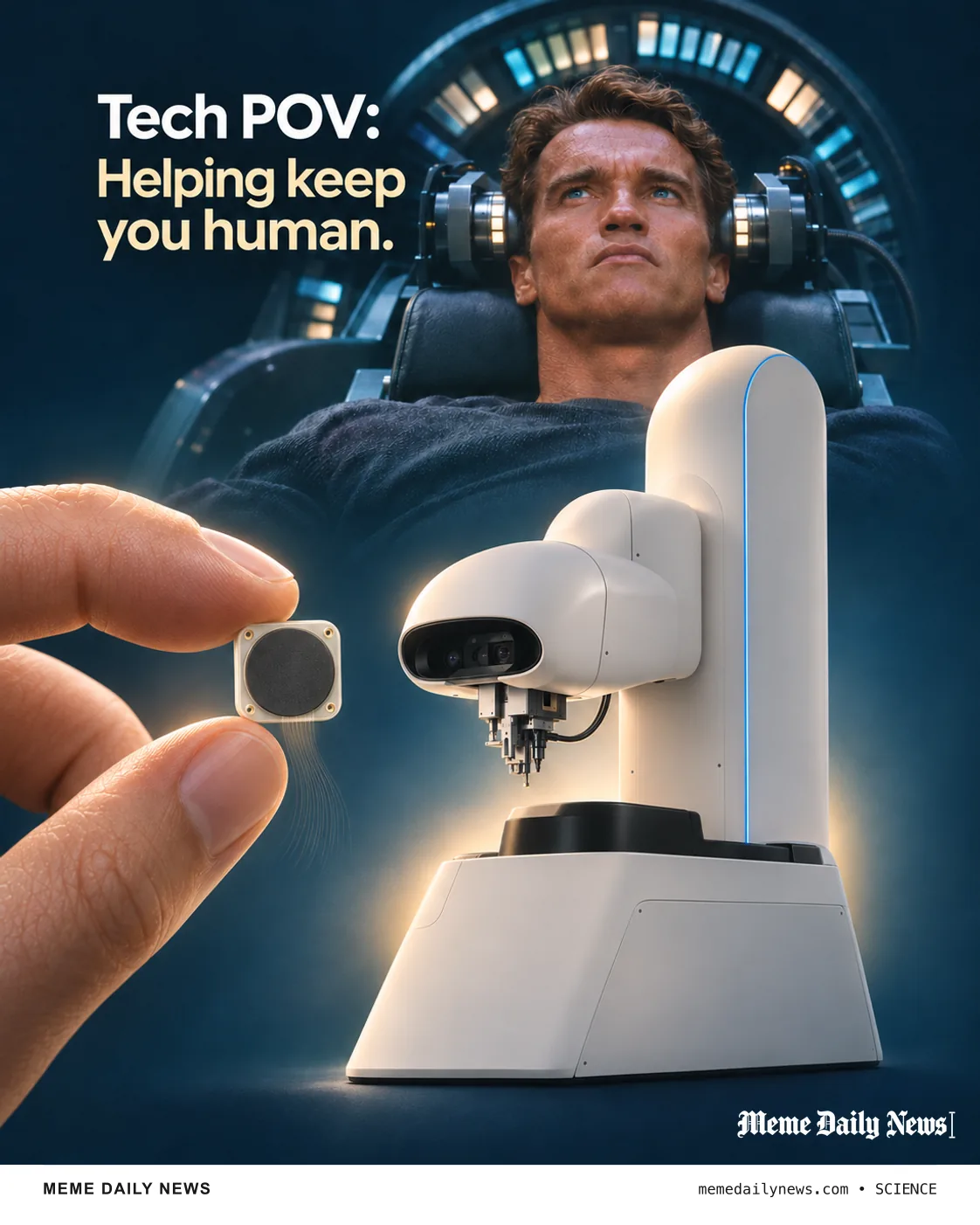
The actual story.
Neuralink’s October 29 announcement describes a 72-hour hackathon at a VOICE study participant’s home, testing communication prototypes with him and his wife.
Engineers tested automatic speech detection, live neural-signal feedback, iOS dictation and faster corrections. Bloom gained lock-screen controls and phone-call integration. An imagined “Hey Neuralink” command could also trigger a Grok computer agent.
These were company-reported prototypes involving one participant. Some demonstrations include later refinements. The report concerns speech software, not a new surgical robot announcement.
The surgical engineering behind the connection
R1 separately inserts the fine, flexible electrode threads that connect an implant to the brain.
Cleo Abram’s October 30 tour of Neuralink gives that process a close-up. Cameras and sensors map the brain’s surface, updating the map to help avoid blood vessels. A fine needle picks up an electrode thread and inserts it. The video reports about 1.5 seconds per thread for the next-generation R1. That is an insertion time, not the length of the operation. Abram’s hands-on demonstration uses a realistic model head based on brain scans, not a patient.
What the robot is actually installing
There are three different pieces: the robot that performs the insertion, the implant that records neural activity, and the software that turns those signals into commands.
Neuralink’s PRIME study brochure describes the N1 implant as 1,024 electrodes distributed across 64 threads, each thinner than a human hair. The electrodes record activity in a brain region involved in movement intention. The implant transmits that activity to software that decodes it so a participant can control an external device. These are the published study specifications, not a newly announced electrode count for the robot in Abram’s video.
The flexibility creates an engineering tradeoff. Thin polymer threads can bend, but that also makes them difficult to push into tissue. Neuralink’s 2019 technical paper described robotic insertion as its answer. That early research hardware is not identical to today’s implant, but it explains why the robot is part of the system.
Testing insertion through the protective membrane
The company has also tested inserting threads through the dura, the protective membrane beneath the skull, instead of cutting away a portion first. Neuralink says it performed that procedure at Toronto Western Hospital in May 2026 and reported it on June 30. Leaving the membrane in place obscures the blood vessels and the distance to the brain’s surface. Neuralink describes using a fluorescent dye and infrared imaging to reveal vessels, plus optical coherence tomography to measure depth.
Placement is only the beginning
A successful insertion must become a connection that continues to provide useful signals. In its January update, Neuralink acknowledged learning from thread retraction in its first participant and said performance still varies with anatomy and medical condition. The company also showed participants using their implants for computer control, art and an assistive robotic arm. Those reported uses explain what the surgical engineering is for.
Neuralink’s PRIME study is evaluating the safety of the implant and surgical robot, and how well the system enables people with paralysis to control external devices. The implant and robot remain investigational and are not available for sale.
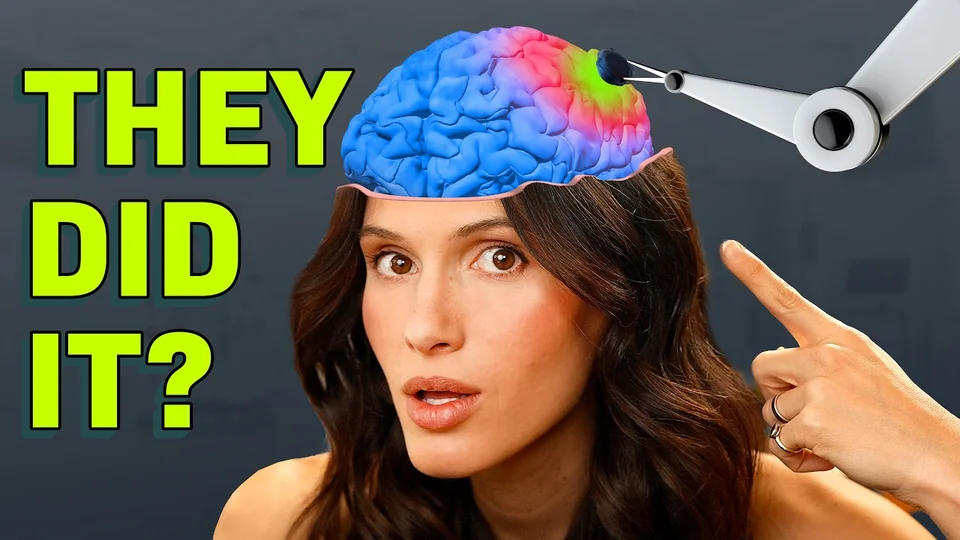 Neuralink’s Newest Brain Chip Isn’t What You ThinkCleo Abram · Watch on YouTube
Science fiction imagined putting new memories into your head. Neuralink’s work points toward something more personal: helping someone express the thoughts already there. Dictating a message, correcting a word or making a phone call can mean less dependence on another person. That’s the promise worth watching: technology giving people more control over their own lives.
Receipts, not rumors.
- Neuralink · original October 29 VOICE hackathon announcement
- Cleo Abram · surgical chapter; demonstration uses a model head
- Neuralink · official PRIME study brochure
- 2019 technical paper · earlier flexible-thread hardware
- Neuralink · Two Years of Telepathy
- Neuralink · first transdural procedure, May 2026
- Neuralink company updates · June 30 report
Read the original reporting: Neuralink / Cleo Abram
The reporting above provides context. Illustrations are editorial interpretations, not source photographs.
What’s your take?