
XREAL AURA Opens Orders at $1,099, Bringing Android XR to a Portable Workspace
XREAL AURA turns Android apps and a mirrored laptop screen into a portable virtual workspace. Orders are open, but shipments are still ahead—and comfort and app fit will determine its usefulness.

The actual story.
Google and XREAL opened AURA orders on October 28, 2026, in the U.S., Canada and South Korea. Google advertises launch pricing starting at US$1,099 through the end of the year. XREAL expects shipments to begin in mid-November on a rolling basis; that is an estimate, not a guaranteed delivery date. Bundles and configurations cost more, and the store says price, delivery and final specifications remain subject to confirmation.
Android XR lets users arrange Android apps around them. Google says a compatible laptop connected with a video-capable USB-C cable can mirror its screen as one adjustable window alongside those apps, without installing extra software. This is laptop screen mirroring, not a promise of several independently extended desktop monitors. Gemini can help with content the user shares from their view.
The transparent glasses have a 70-degree field of view and weigh about 95 grams, according to the manufacturers. A separate wired compute puck holds the battery and main processing hardware. That split keeps weight off the face, but the glasses are not a wireless, self-contained computer. XREAL lists hand, voice and puck-touchpad controls, plus support for Bluetooth keyboards and mice.
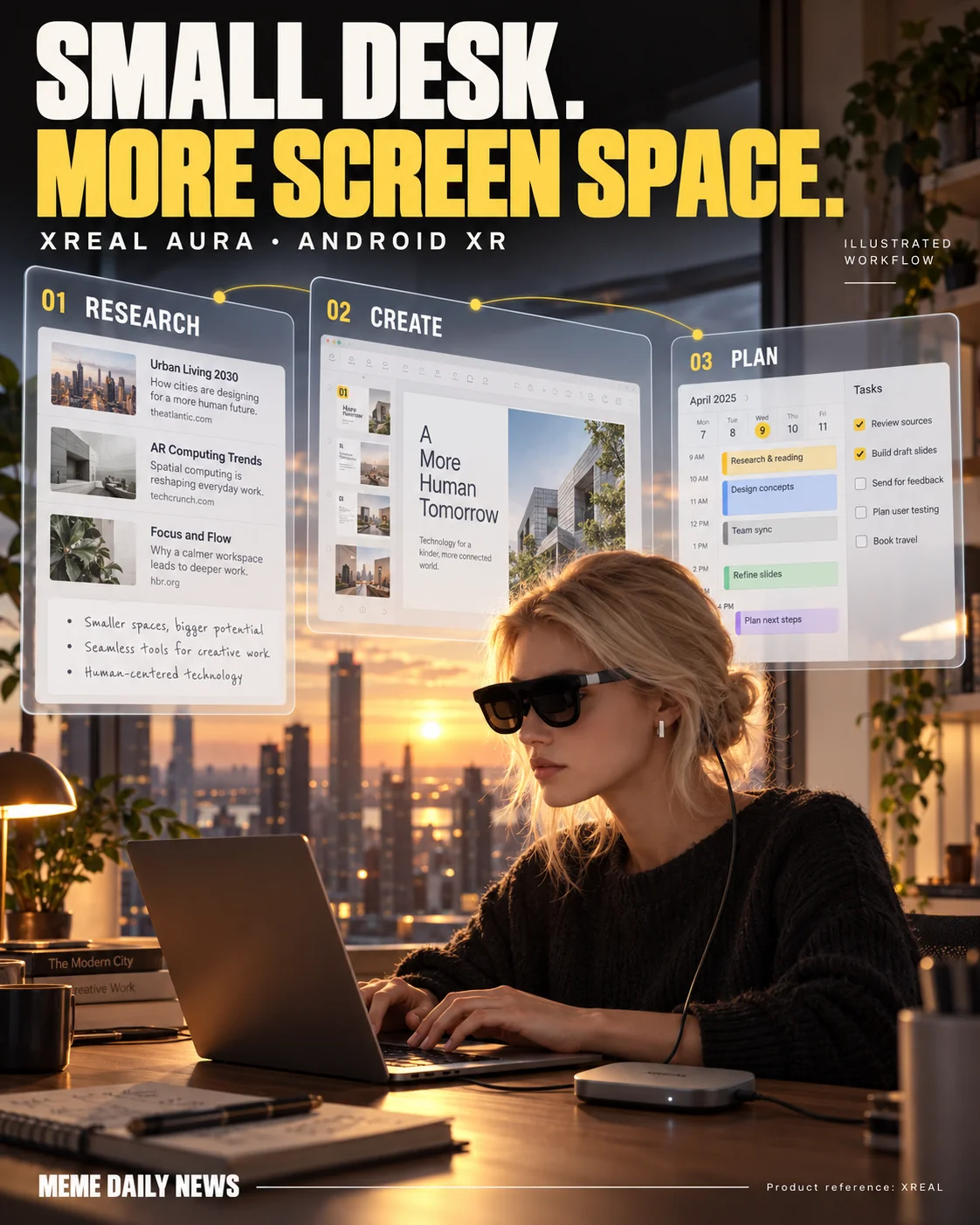
The useful question is whether this arrangement improves an existing workflow: keeping research beside a document, for example, when a desk cannot accommodate extra displays. Comfort, readable text, app compatibility and the practicalities of the cable and puck matter more than the size of an illustrated workspace. The Research, Create and Plan panels in the accompanying image are conceptual illustrations, not screenshots of AURA’s interface.
Some announced experiences are still ahead. Google describes a new spatial Google Photos gallery as coming later this year, rather than a feature already available at launch.
AURA’s appeal is carrying a workspace instead of extra monitors. Android apps can sit beside a mirrored laptop screen, but it doesn’t give your laptop several independent extended displays. You still need the wired compute puck and a compatible USB-C connection. For people working away from a desk, the opportunity is more room to arrange their work without packing more screens.
Receipts, not rumors.
- Google — October 28 launch announcement
- XREAL — official AURA specifications
- XREAL US store — pricing and estimated shipping
Read the original reporting: Google; XREAL
The reporting above provides context. Illustrations are editorial interpretations, not source photographs.
What’s your take?